

Pretending to write like it’s 1480
And 10 lessons from a historical source

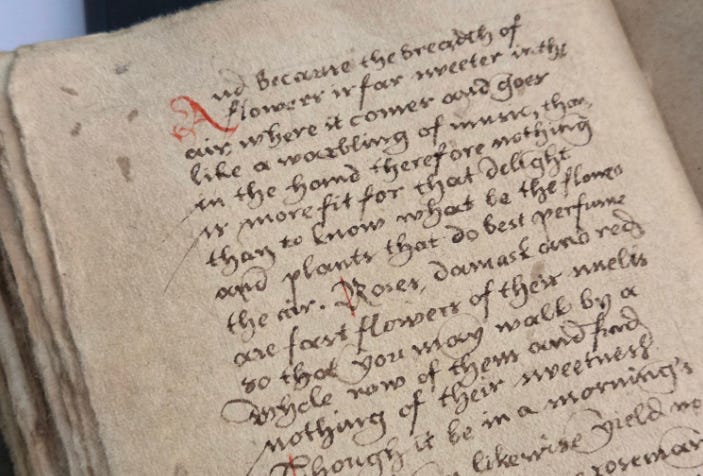
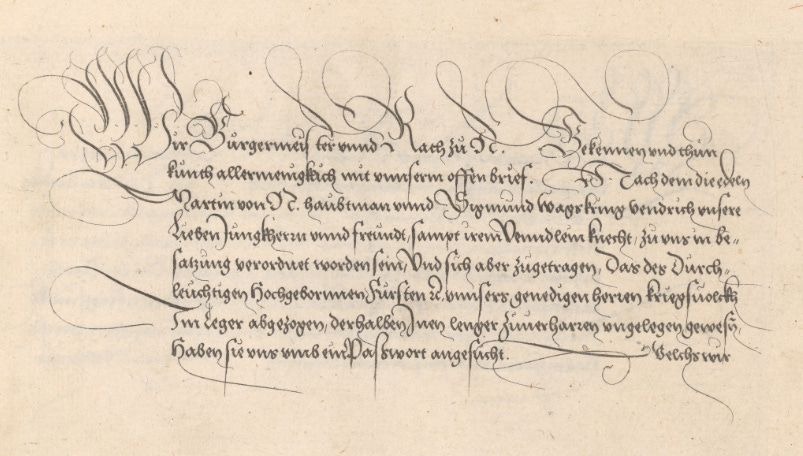
My latest obsession is trying to learn 15th century German Chancery script ever since finding this alchemical manuscript below.
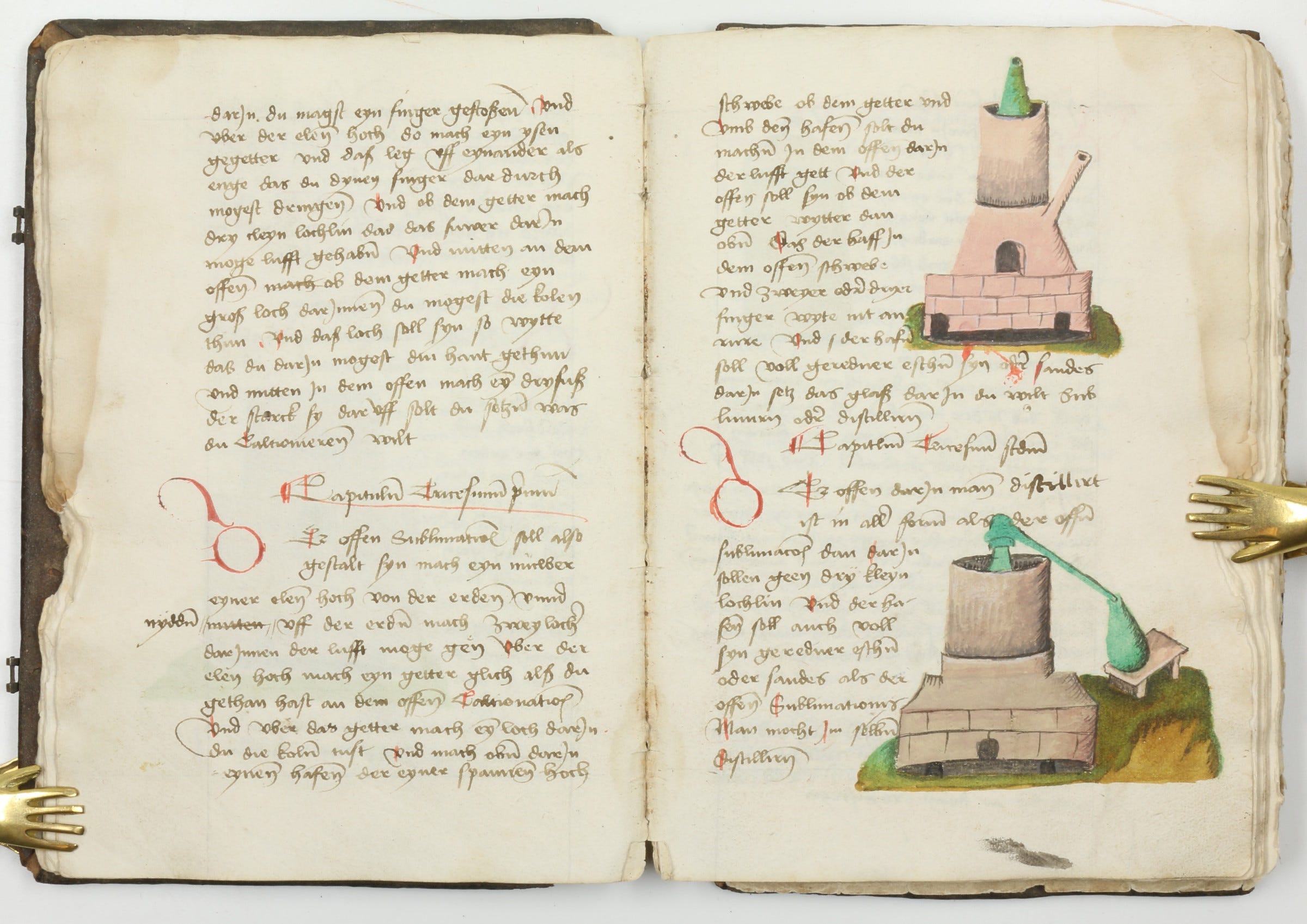
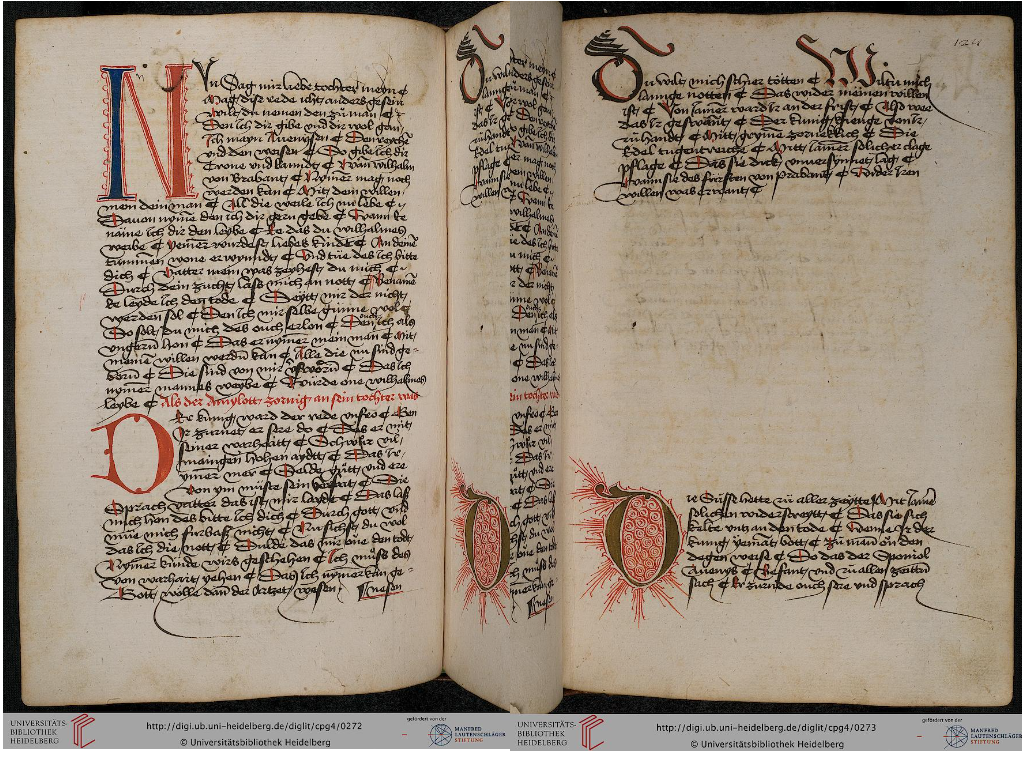
I particularly love how fluid the script looks. Another source below uses the same script although I think it’s a bit harsher on the eye:
In learning how to write in this style it was important for me to find an authentic source and I found it in Johann Neudörffer’s 1539 copybook (writing manual) Ein gute Ordnung (The Good Order).
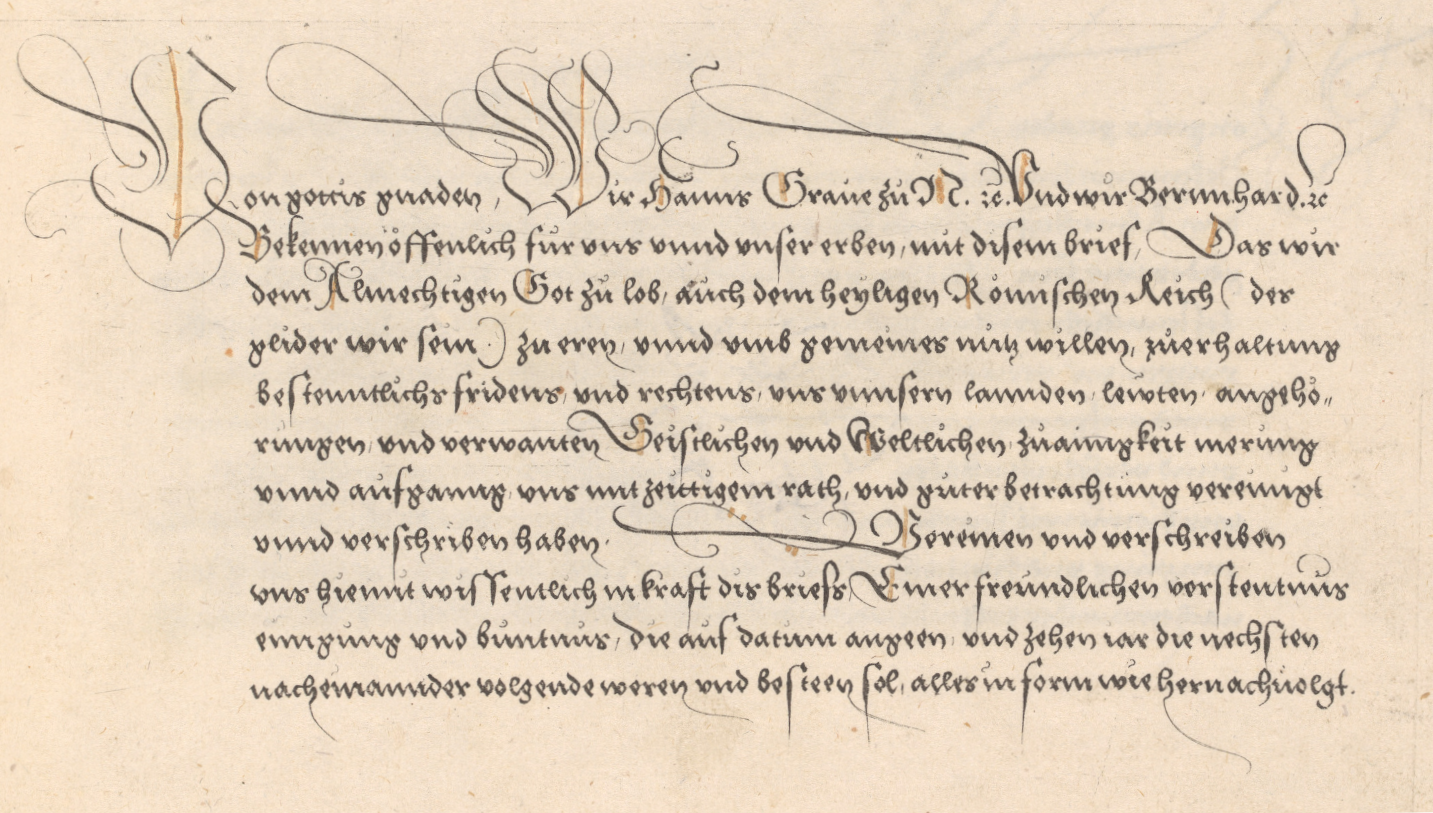
Neudörffer was the most influential writing master in Germany at the time. He developed the Fraktur script which would be used in Germany from the 1500s to World War II as well as writing the inscriptions in Dürer’s apostle paintings. Not only was he an accomplished writing master but he also taught mathematics, reading, grammar, fencing and music!
I’ve broken down his Ein Gute Ordnung copybook into 10 lessons below.
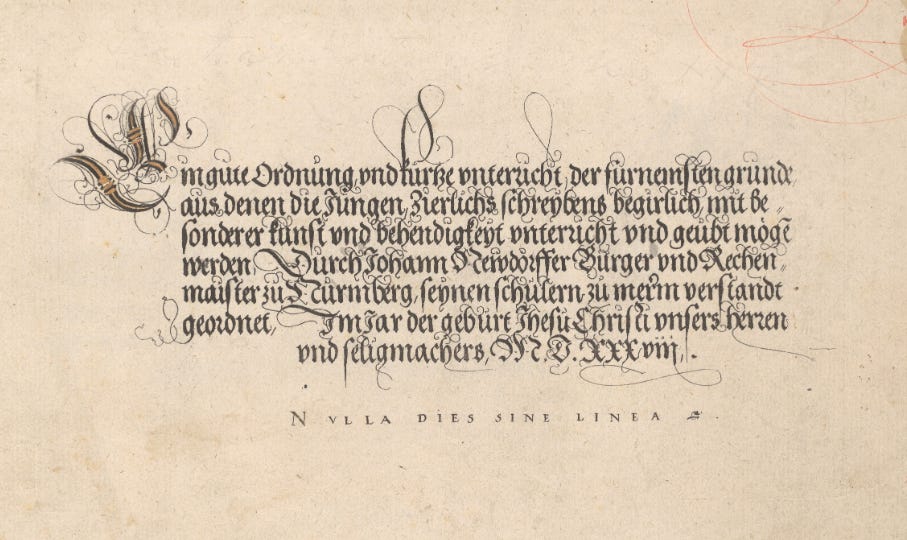
The Lessons:
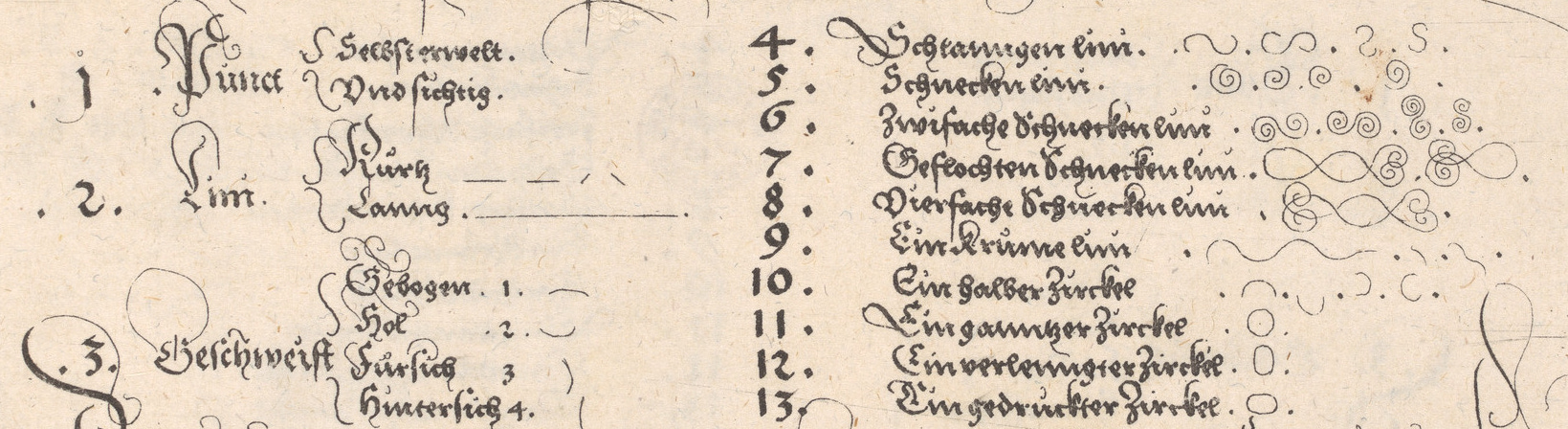
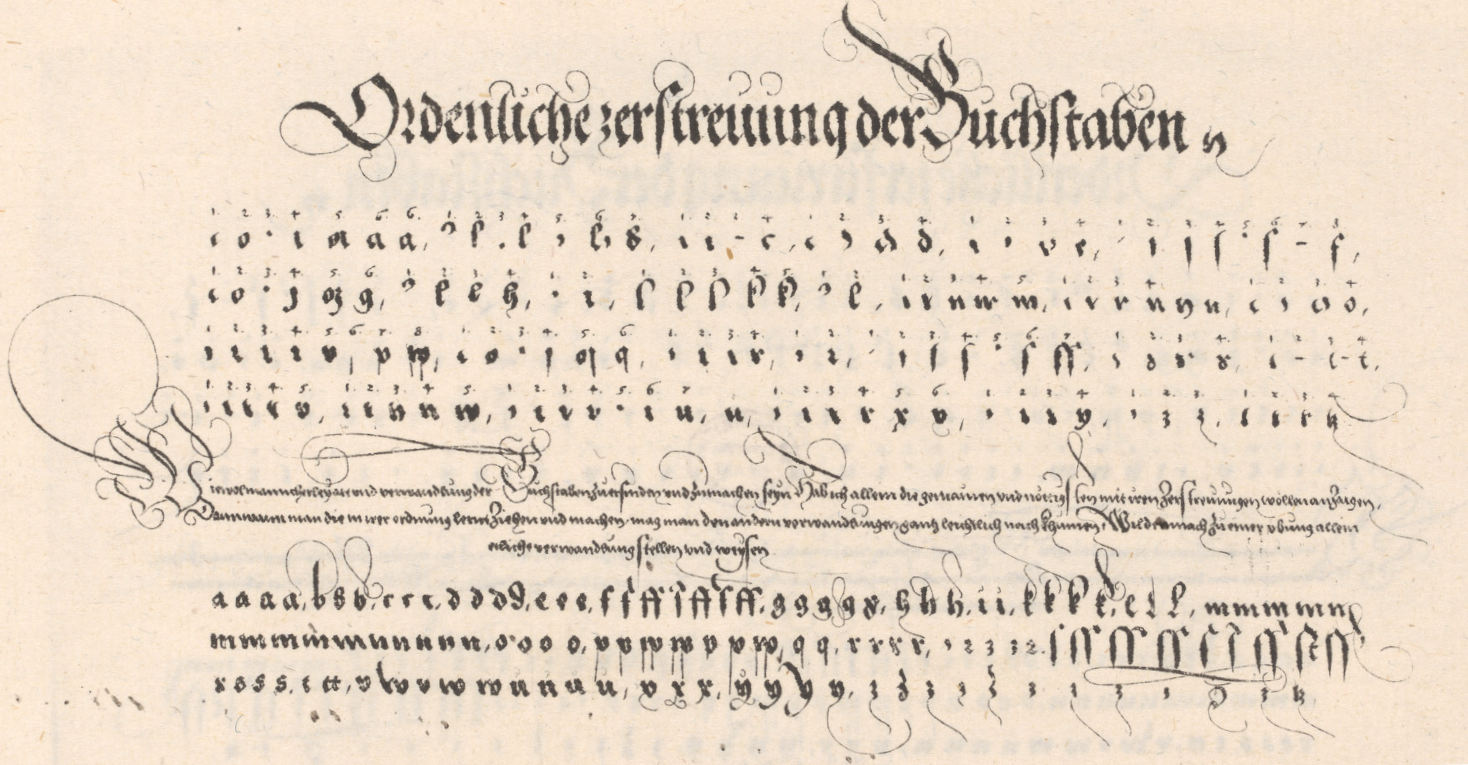
Neudörffer starts off with what we would consider ‘drills’ today to warm up your hand. The page is composed of points/dots (1. Punct … might be hard to see in this printed copy), lines short and long (2. Lim) and bowed lines (3.). The following 4-13 are composed of various swirled lines, ‘snails’ (5.), ‘double snails’ (6.) and circles squished and elongated (11-13).
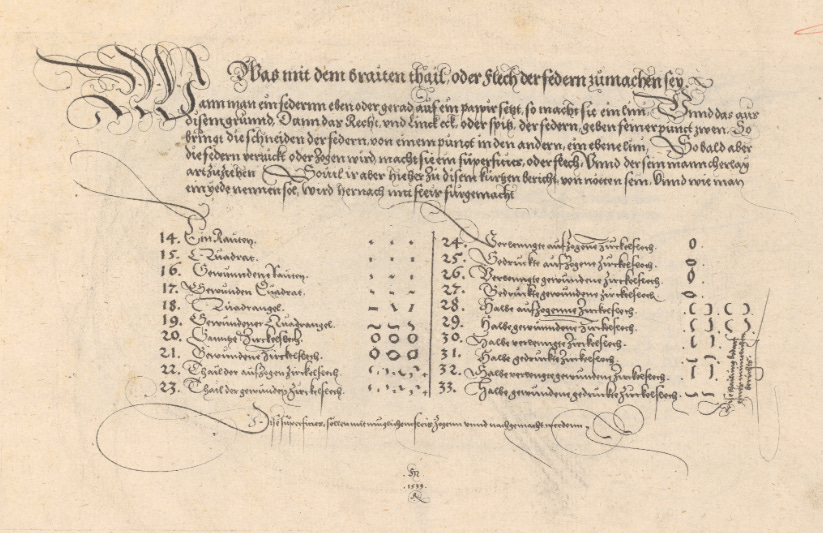
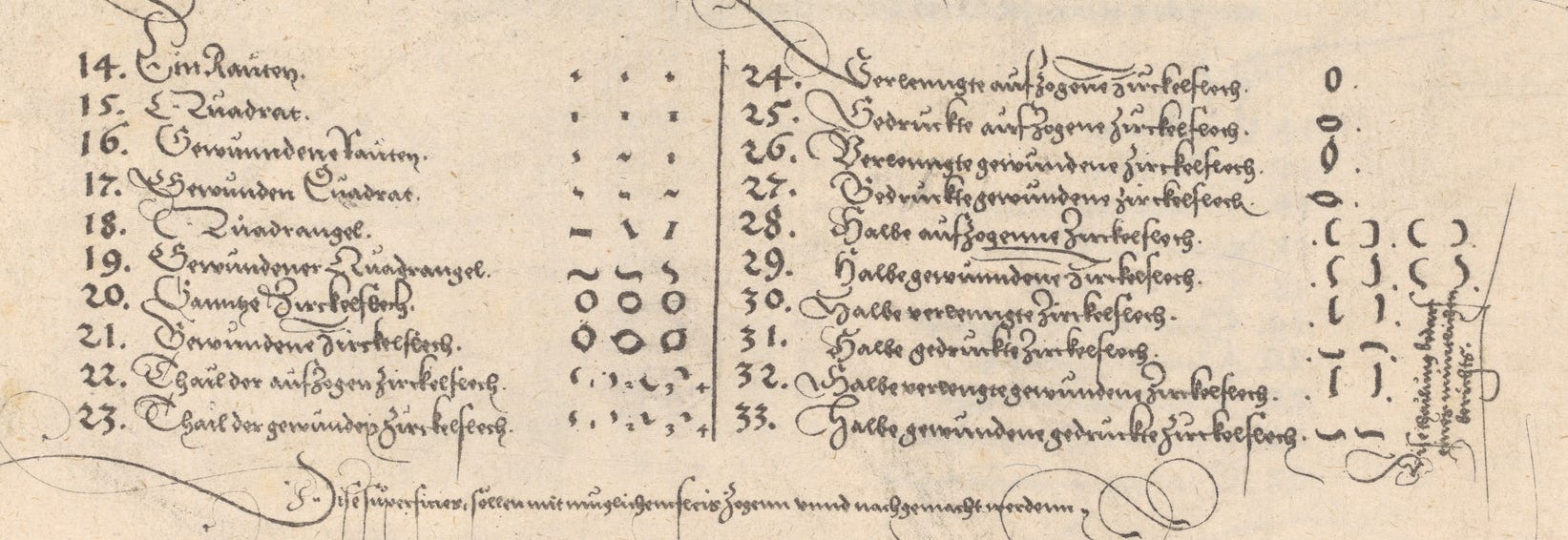
Next, using a broad edge nib pen you can start doing the individual strokes that would eventually make up the script. Neudörffer writes that “these lines should be diligently copied and practiced solely so that one may learn and appreciate the pen’s potential and attributes.”
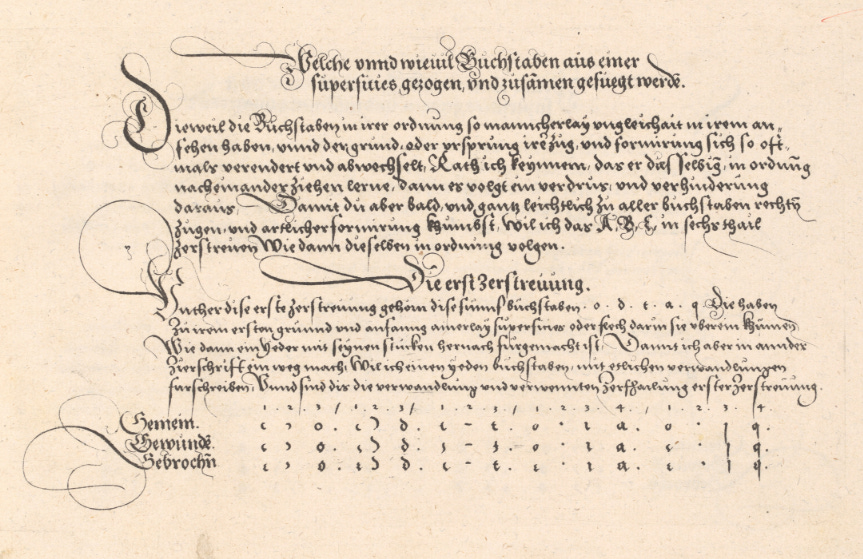
Once the student is used to the varied component elements/strokes that can be made by the pen, Neudörffer goes onto the lowercase alphabet. Instead of going from a-z he groups the letters into 6 categories based on their first component stroke. For example below o, d, t, a, and q are group because they start with a downward half round stroke. The letters are broken into sequenced strokes and depicted in isolation before finishing with the final letter. He also shows three different styles of writing: ordinary (Gemein), wound/twisted (Gewunde), and broken (Gebrochen). I suggest for starters to copy the ‘ordinary’ line.

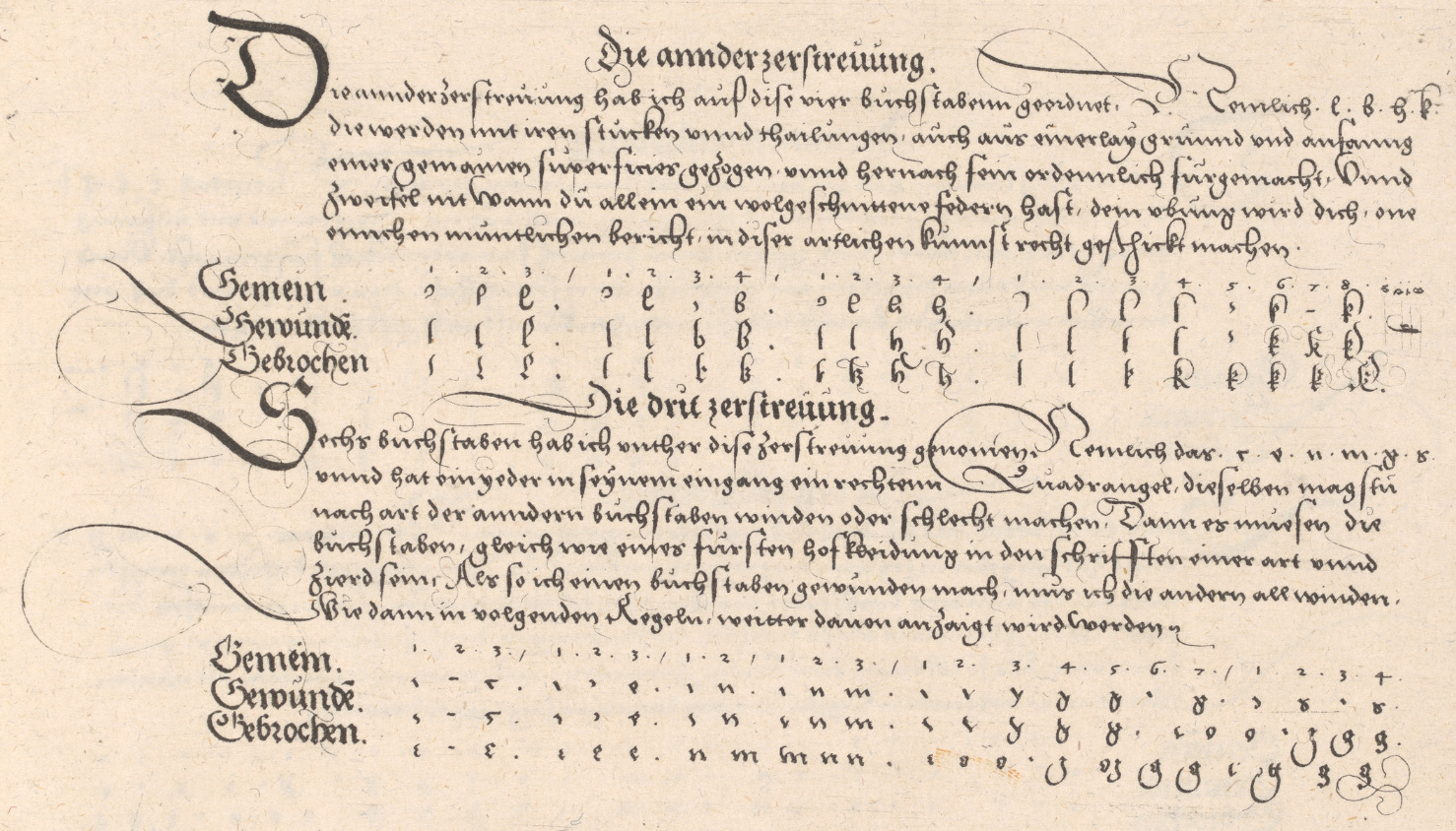
Similarly, l, b, h, and k are grouped because of the loop that is shared at the start of each letter. And below that, c, e, n, m, g, and s are grouped because of the short diagonal downstroke. The c and g might look a little strange to modern readers.
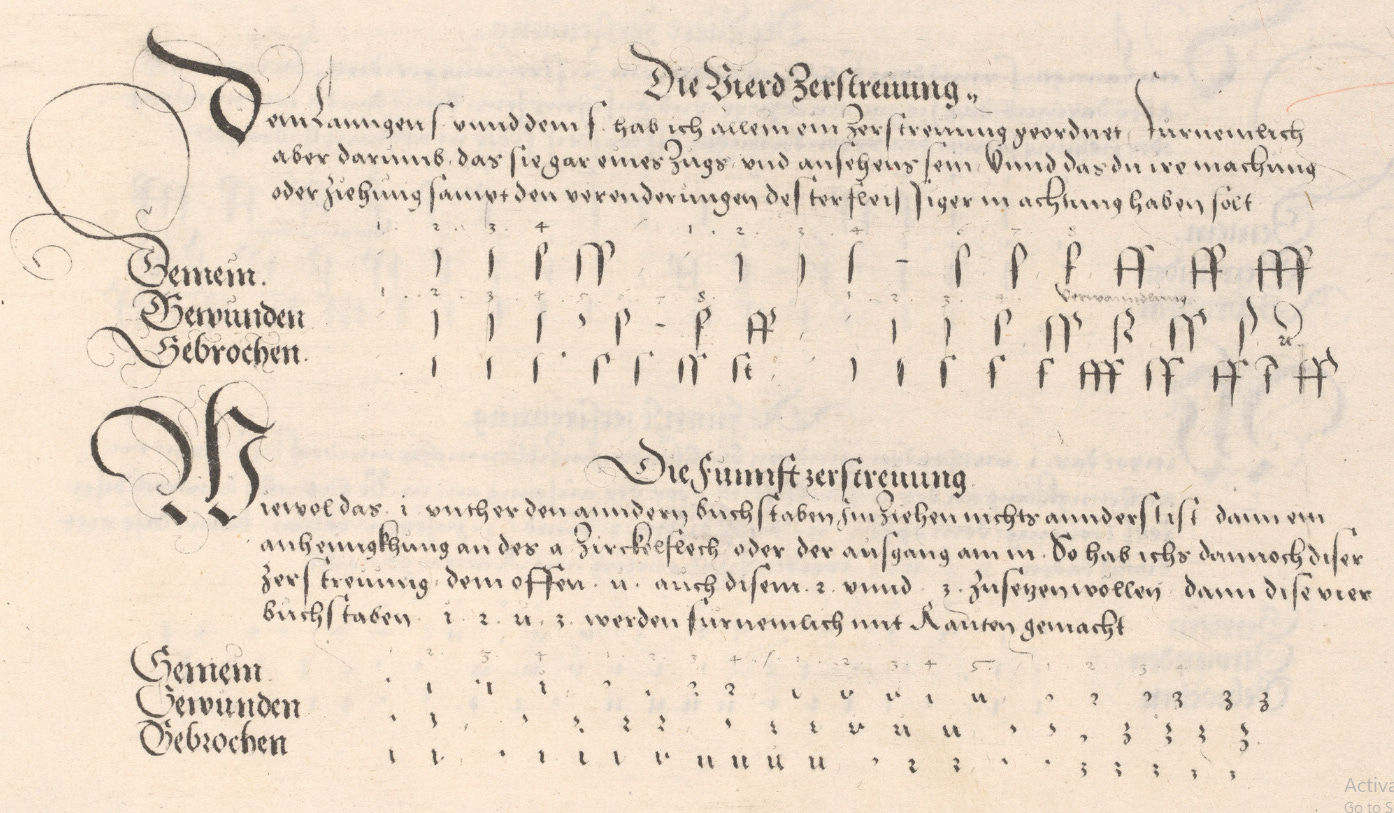
The following page shows the long s and f. Note this letter has a ‘belly’ and is often thicker than other letters - it’s formed by a curved downstroke and then following back up the letter to the rounded top so you get a sort of double stroke within the belly to make it thicker. Below that is i, rounded r, u and z.
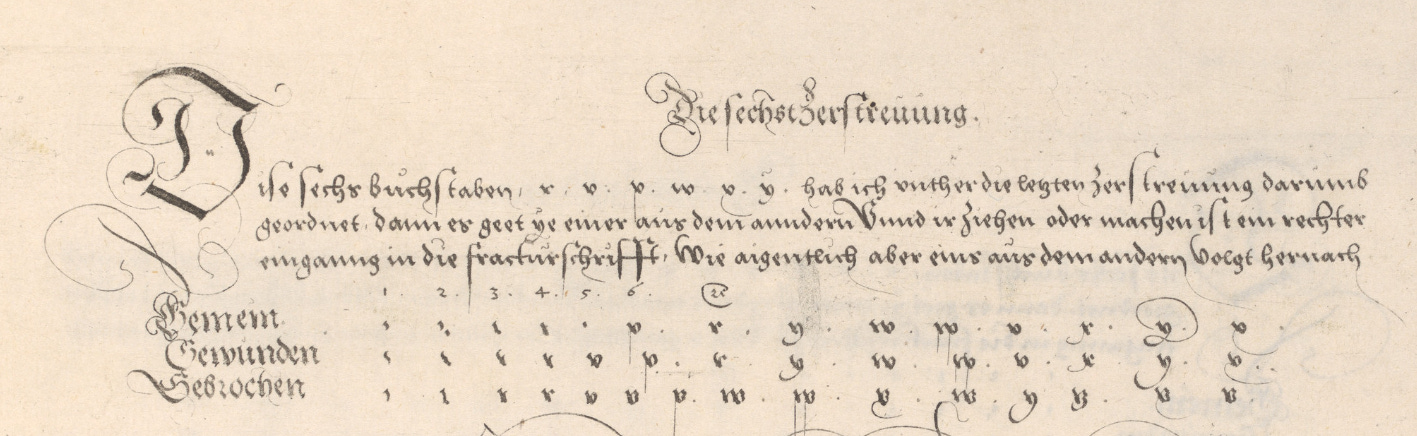
Finally we have r, u/v, p, w, x, y.
As a summary Neudörffer gives us this page
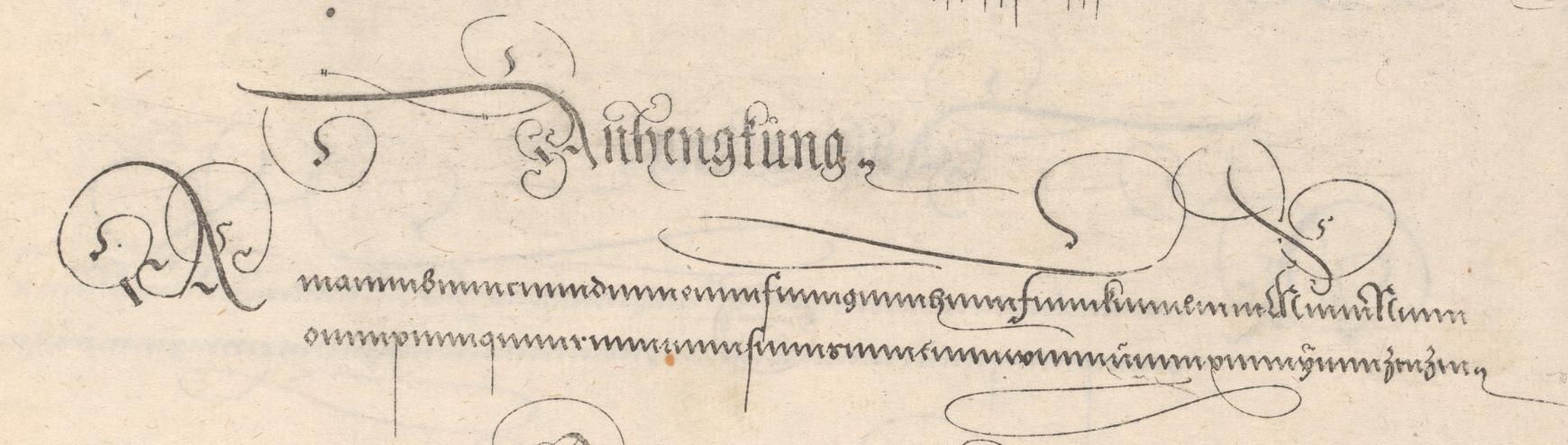
The line below illustrates the overall appearance and inter-letter spacing using double m’s between each letter (ammbmmcmmd etc)
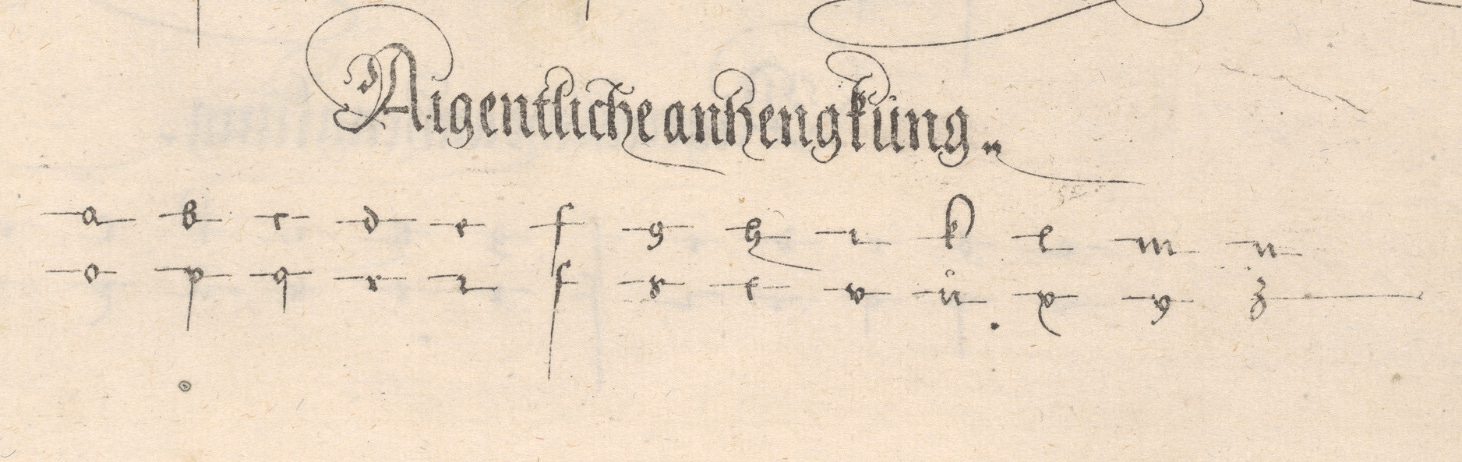
I really love the illustration below, it shows how each letter is connected (Aigentliche anhengkung). The dashes to the left and right of each letter show the point at which letters preceding or succeeding flow on from. So for the letter a, letters preceding are linked around the midpoint of the left curve and letters succeeding follow from the bottom of the last stroke, which is the same as what ordinarily we’d do today. But! Letters succeeding the letter c are connected from the top horizontal stroke (and not the bottom curve as we would do today). Same with the t. Interestingly the long s never has a letter connected preceding it (but this particular letter isn’t something modern readers have to be wary of).
I’ve read quite a few copy books and I’ve never seen this illustrated in this manner before, I think it’s so clear and concise!
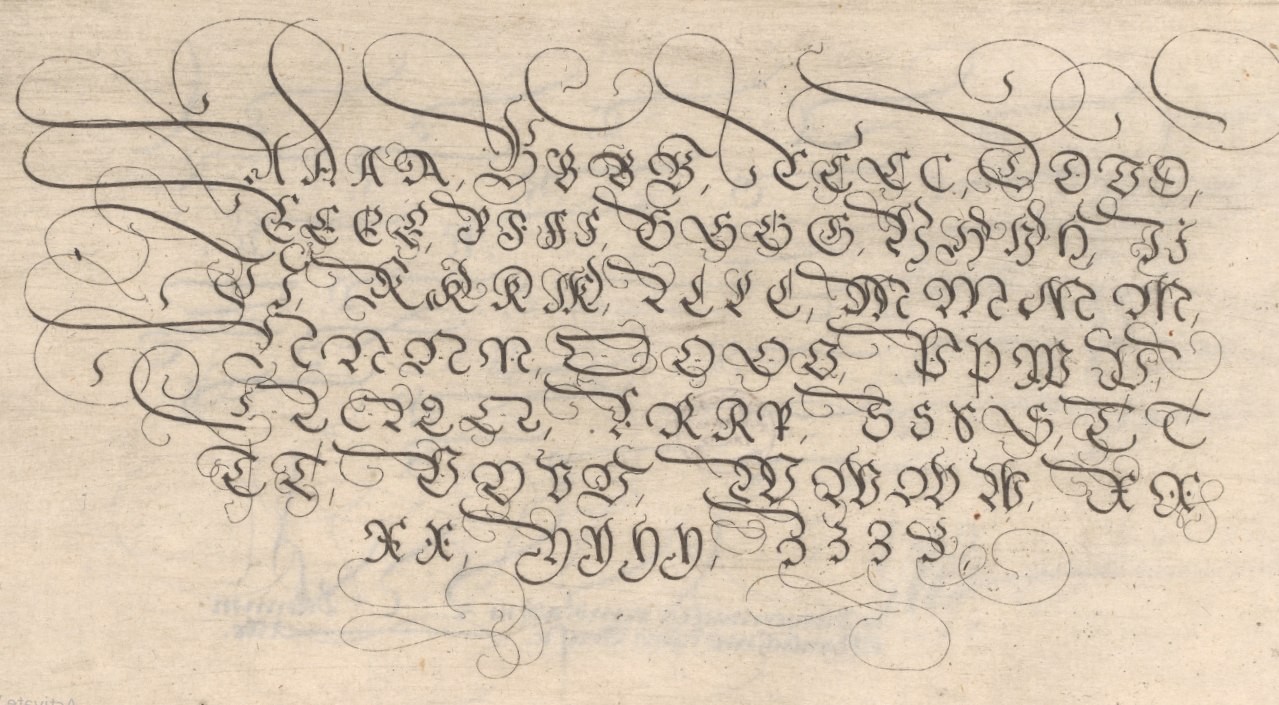
For the capital letters he illustrates them A-Z starting each letter with a large flourish and then subsequent ordinary styles. He doesn’t break these down into component strokes.
The latter pages have sample text intended for copying. Copying ‘model’ texts was the crux of learning a script. It was also suggested that students would use translucent sheets on top of a model text to copy and then also try to do it by sight.
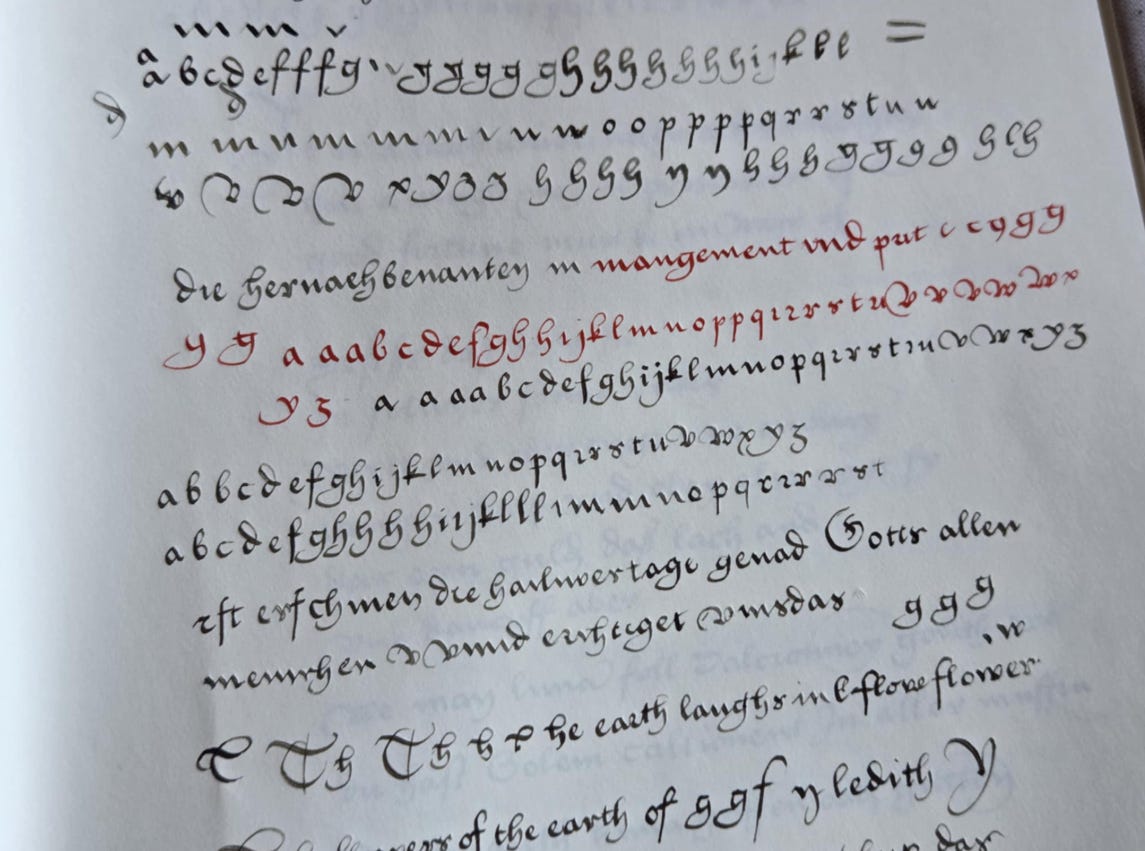
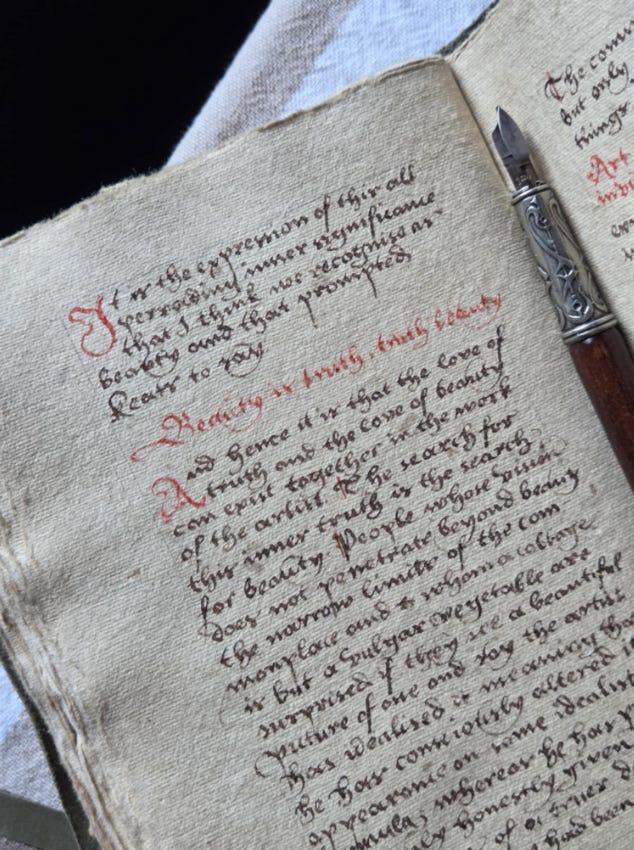
My own attempt
For my own practise I was using a dip pen with a 1mm Brause Bandzug nib (it’s a German brand but you could use any 1mm broad edge nib from any other manufacturer). I initially wrote on normal paper before moving onto a vintage style leather journal with cotton dyed paper. Because the cotton fibres tended to catch on the nib I was writing at a lower pen angle to the paper and also a really inky walnut ink. The red is a Winsor & Newton Scarlet Lake watercolour I brushed onto the nib.
Further reading:
Ein nutzlich vnd wolgegrundt Formular Manncherley schöner schriefften, by Wolfgang Fugger, 1553.
A copybook by one of Neudorffer’s most famous pupil. It goes into similar things with additional pages on arm position and quill carving.
Translating the Hand into Print: Johann Neudörffer’s Etched Writing Manual, by Susanne Meurer, 2022.
A great journal article about the copy book in context and it’s unconventional printing technique.
Wow. You’re great
Wow - I can't even read this, never mind write it. You write in this hand beautifully, too.